A Day in Camden Harbor with Robert Gruppé
Two painters, one harbor, and a lesson in what to leave out
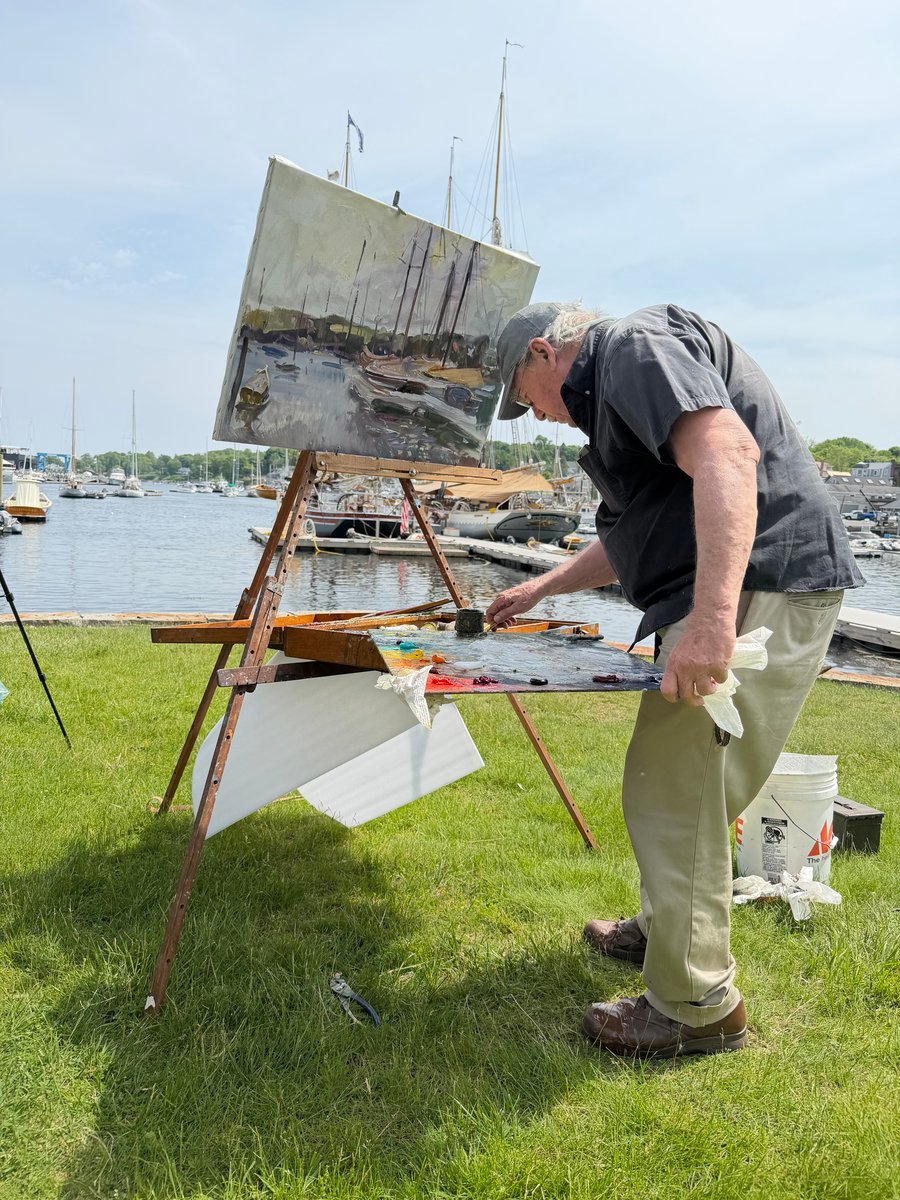
Some days you mark on the calendar and then spend a week quietly hoping the weather holds. This was one of those. I had the chance to spend an afternoon painting alongside Robert Gruppé, and we pointed ourselves north to Camden Harbor, Maine, to do it.
For anyone who doesn't know the name, Robert is the third generation of a painting family that reads like a chapter out of American art history. His grandfather, Charles Paul Gruppé, painted with the Hague School in Holland. His father, Emile Gruppé, was one of the pillars of the Gloucester art colony and ran the Gloucester School of Painting on Rocky Neck for thirty years. Robert grew up inside that tradition and has carried the plein air torch forward in his own way ever since. So this was not just a nice day out. This was a chance to stand at the easel next to living history.
The Drive North
We picked Robert up at Rocky Neck in Gloucester — the same stretch of waterfront the Gruppés have painted for the better part of a century — and loaded the Jeep until there was barely room for the three of us and the gear. Easels, paint boxes, panels, palettes, the whole circus. There's a particular kind of optimism in a vehicle packed that full of painting equipment. You're committing to the day.
Robert, I should say, is a colorful character in every sense. The drive went fast. We talked shop the whole way up — color, brushwork, the old Gloucester crowd, the business of being a painter, the boats. By the time Camden came into view I felt like I'd already gotten a workshop's worth of conversation, and we hadn't squeezed a single tube of paint yet.
Setting Up at the Harbor
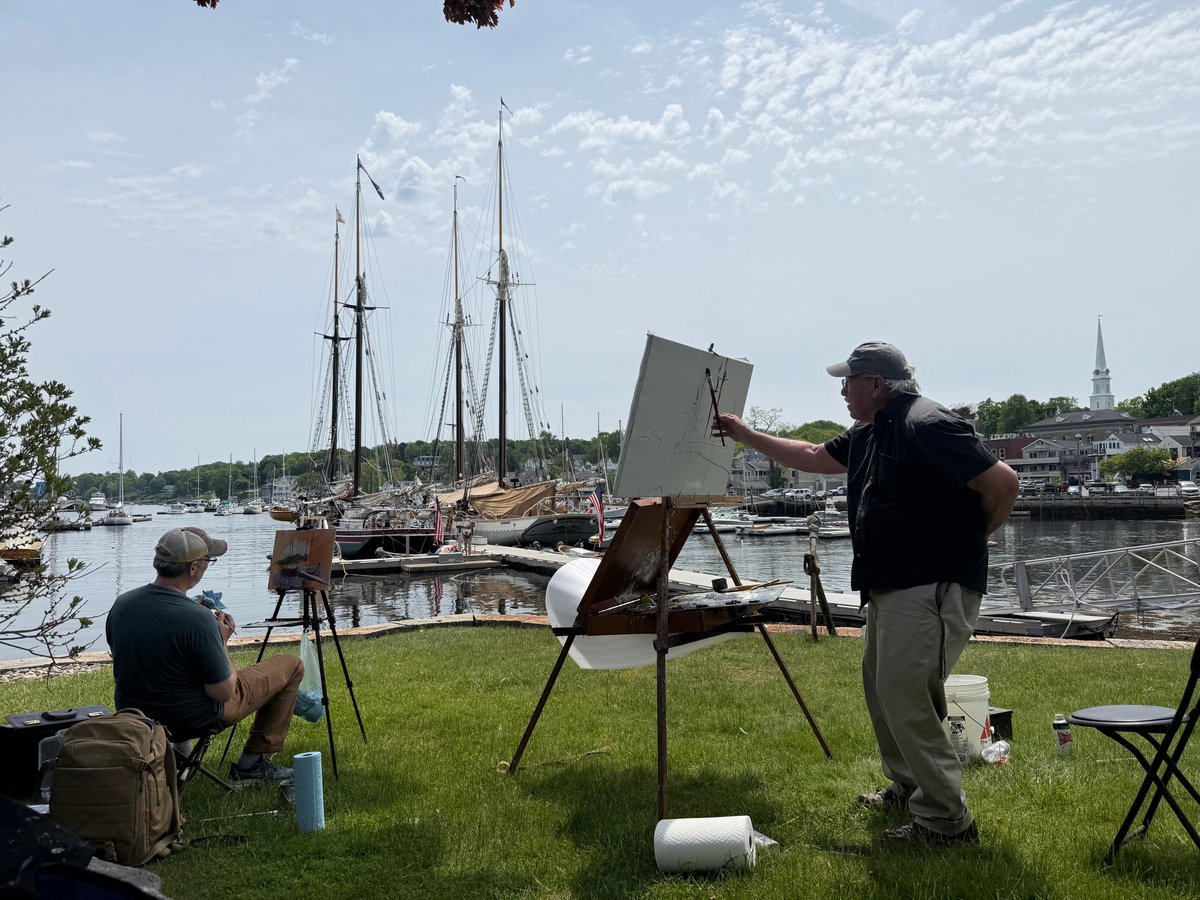
Camden gave us a perfect day for it. Bright, clear, and — mercifully — not too hot, which any plein air painter will tell you is the difference between a pleasant afternoon and a melting one. The harbor was full: two big schooners anchored among a scatter of smaller vessels, masts going up like exclamation points against the sky, all of it doubled in the water below.
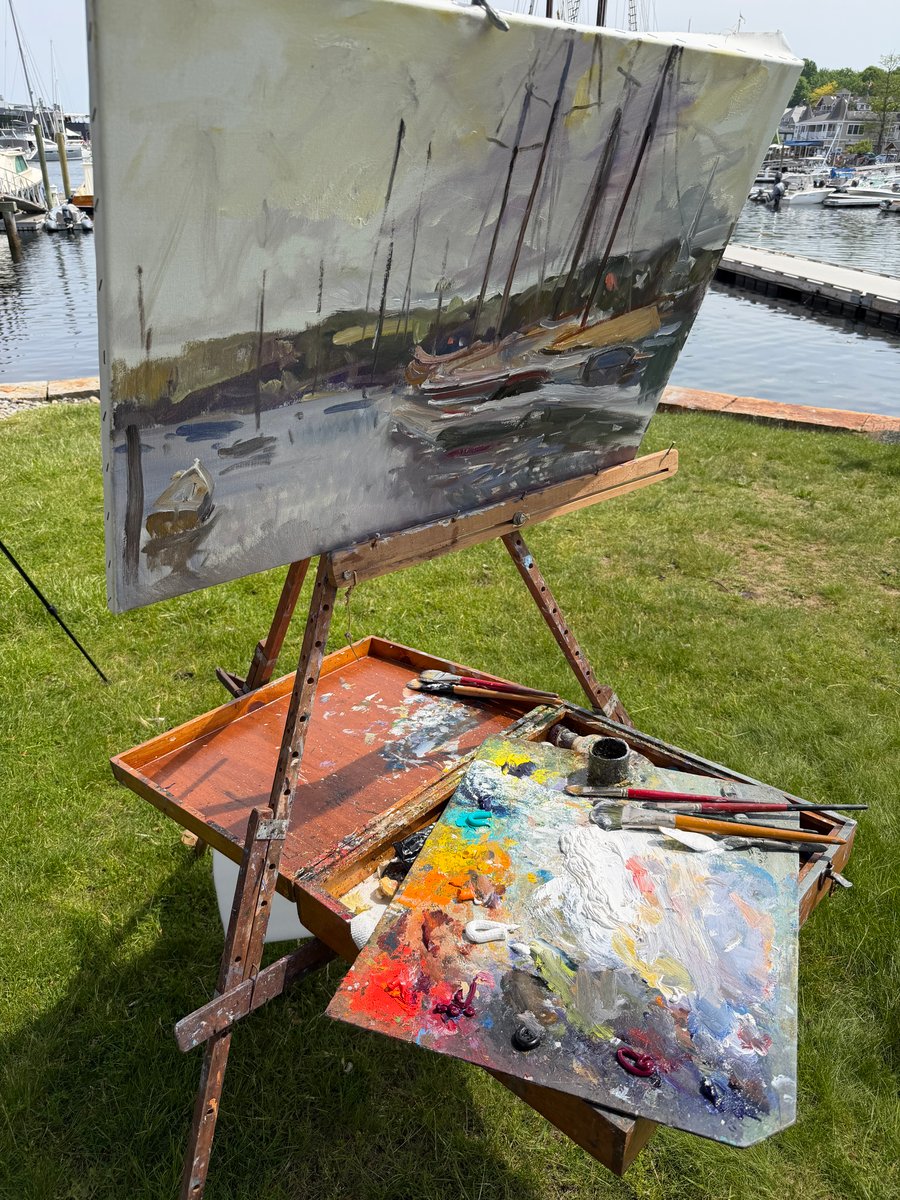
It is, frankly, an intimidating subject. A working harbor throws everything at you at once — rigging, reflections, ripple, a hundred competing values, boats that swing on their moorings while you're trying to draw them. The whole challenge is deciding what to leave out.
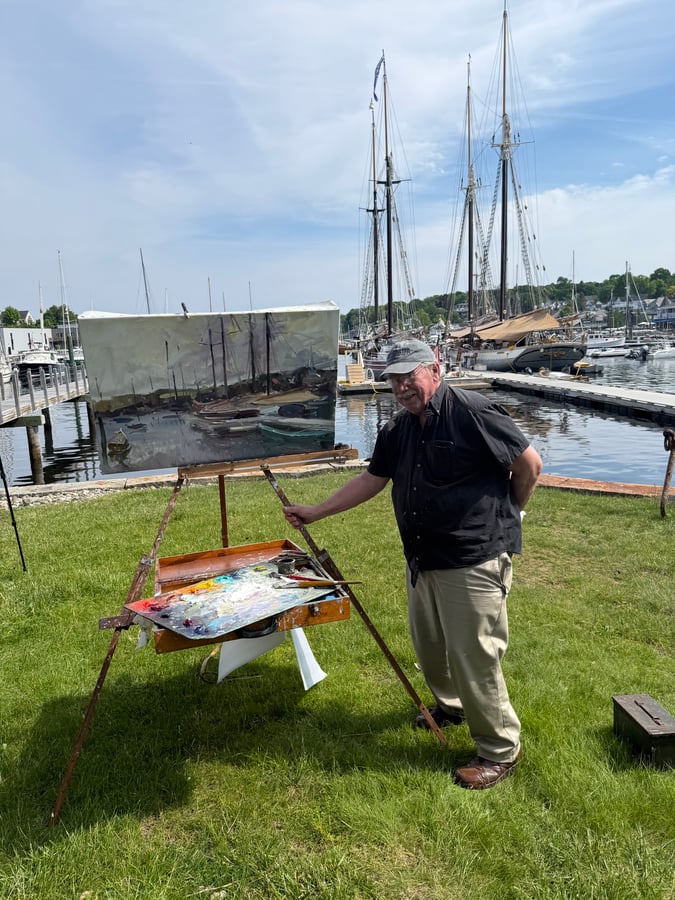
That's where painting next to Robert is an education. Watching him work, you see the editing happen in real time. A mast becomes one decisive stroke. The lit side of a hull, one shape. A reflection, a single dragged note and then he leaves it alone. His canvas stayed loose and atmospheric — soft grays and greens with these warm, knowing accents — and a little skiff anchored the foreground like he'd planned it from the first mark. Meanwhile I found myself reaching for the brighter, higher-key end of things, chasing the color and the flags and the snap of light on water. Two painters, same harbor, two completely different paintings. That's the fun of it.
What I Took Away
The thing I keep coming back to isn't a technique I can write down as a step. It's the nerve. The willingness to commit a loaded brush to the right shape, put it down once, and walk away. Every time you go back in and fuss, you kill the stroke. The confidence in Robert's work — the juicy, economical brushwork that makes a complicated harbor look effortless — is really thousands of hours of judgment about what to sacrifice. You don't paint the rigging. You suggest it at the very end with a few marks and trust the viewer to fill in the rest.
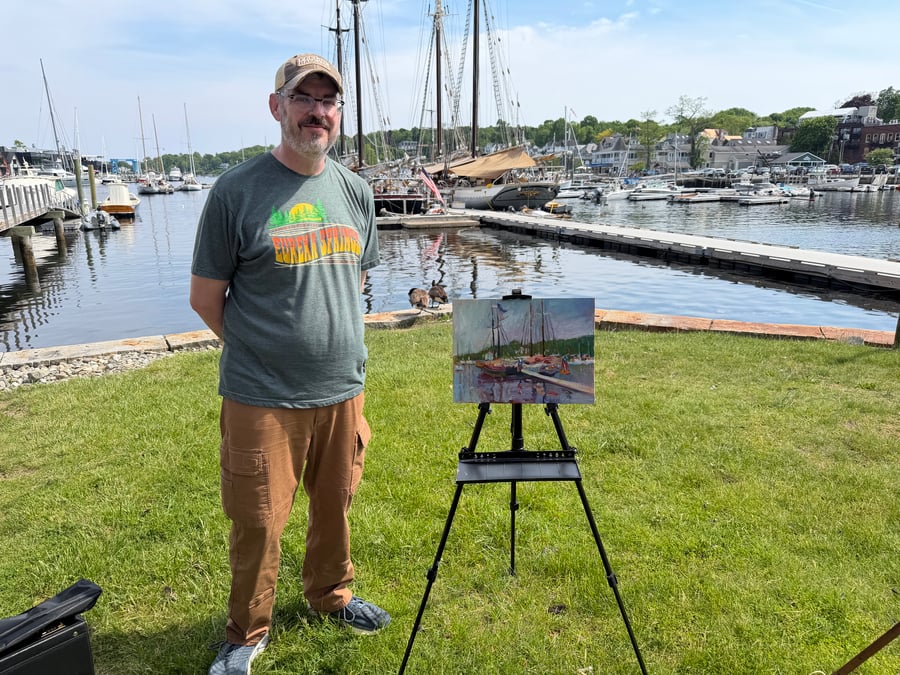
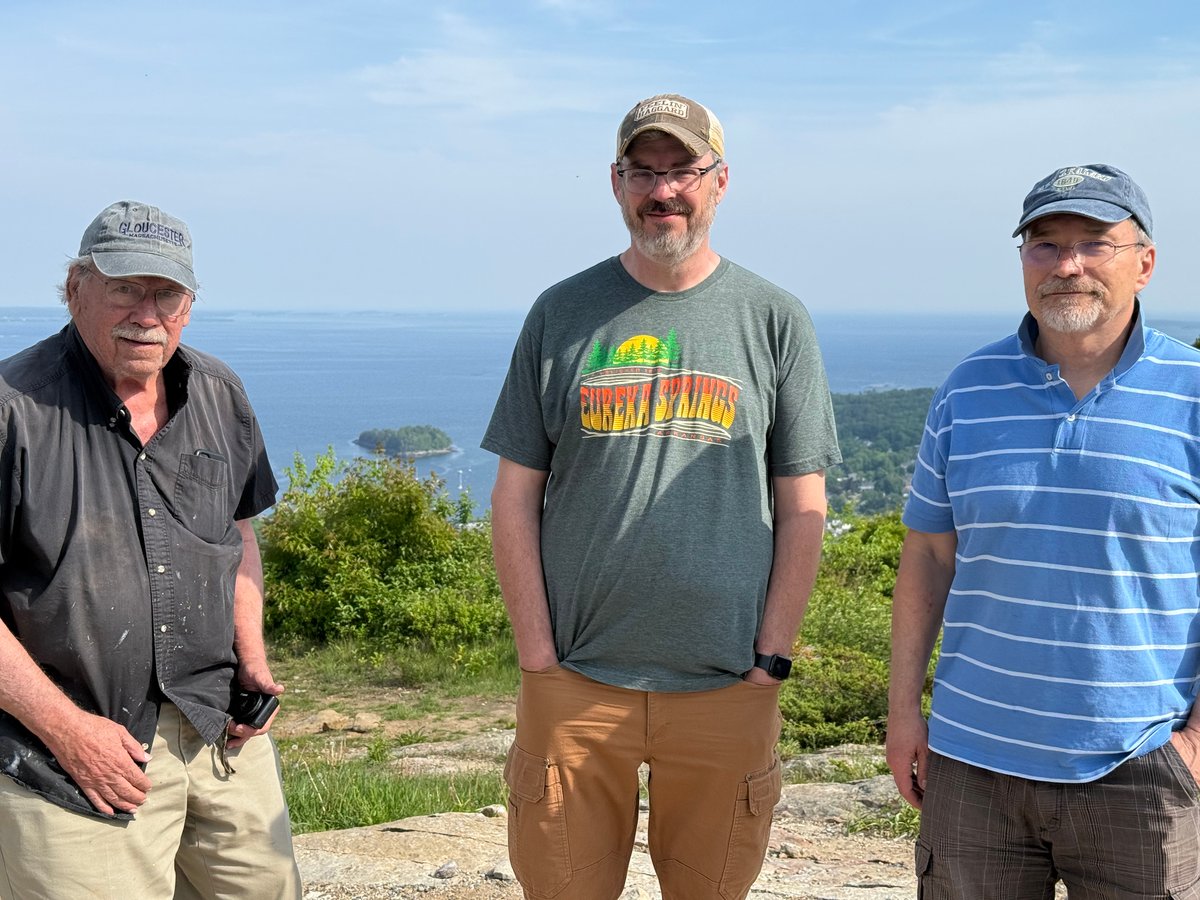
I came home tired in the good way, with a wet panel, a head full of conversation, and a renewed respect for how much can be said with a wide brush and a little restraint. I hope Robert had half as good a time as I did. From where I was standing — Eureka Springs t-shirt, geese wandering past my feet, schooners on the water — it was just about a perfect day to be a painter.