
Easels Under the Oaks
A Plein Air Day at Pfeifer Camp
There's a particular quiet that settles over a group of painters working outside — pencils sketching, palette knives clicking against wooden trays, the occasional "well, that's not working" muttered at a canvas. A few of us from Art Group Gallery packed up our French easels and pochade boxes and headed out to Joseph Pfeifer Kiwanis Camp for a day of plein air painting. It was exactly the kind of slow, good day that reminds you why you picked up a brush in the first place.
A Little History
If you've never been out to Pfeifer, it sits on about 82 acres near Ferndale, roughly fifteen miles west of downtown Little Rock. The camp has been there since 1929, founded by the Downtown Kiwanis Club of Little Rock in memory of Joseph Pfeifer's father as a free residential summer program for kids nine to fourteen. The cabins and lodge were built in the 1930s by the Works Progress Administration, and that WPA bones-and-stone feeling is still there everywhere you look. It's rustic in the best sense — open pavilions, a small river, a swimming pool tucked into a clearing, mature hardwoods that have been there longer than any of us.
Pfeifer Camp location
It also, as it turns out, is a wonderful place to paint.
The Day
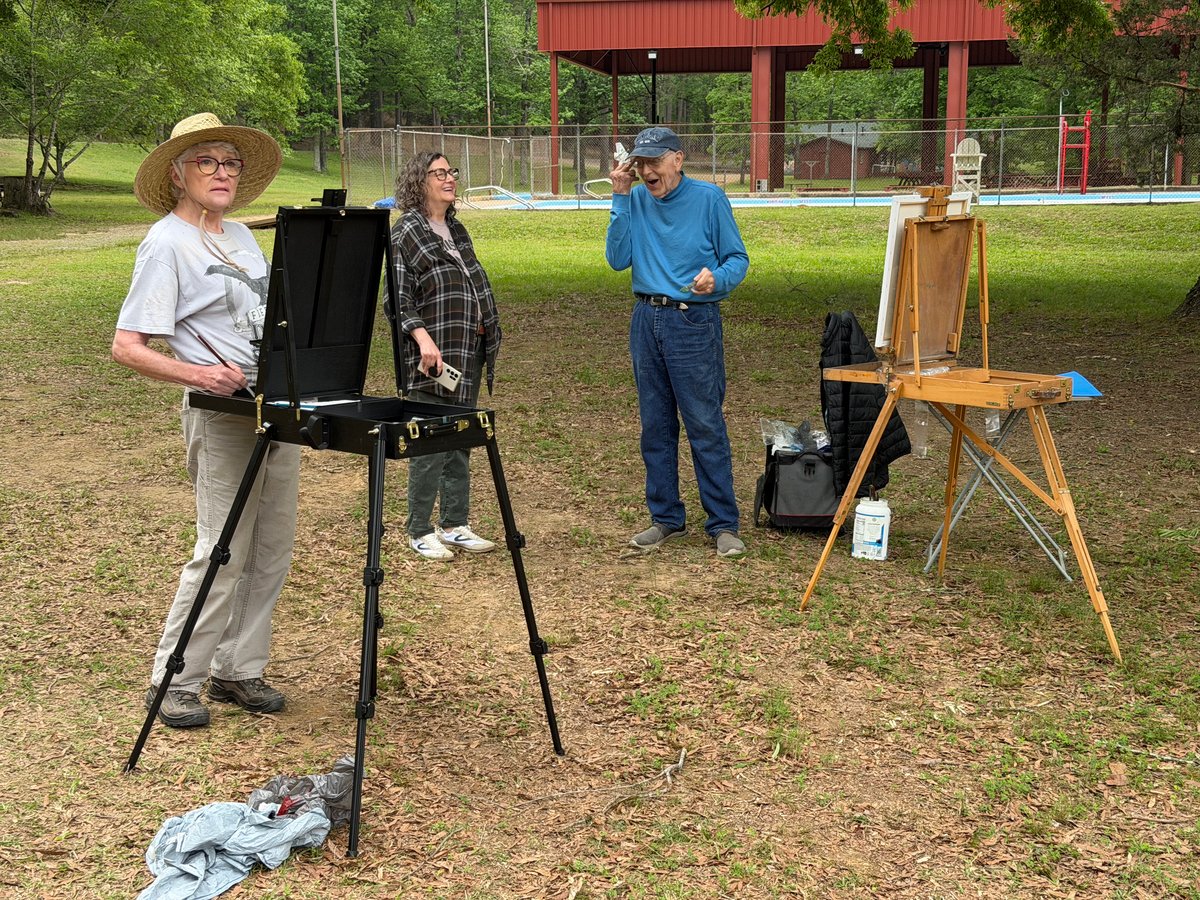
We set up between the pool and the big covered pavilion, under a pair of oaks that threw just enough shade to keep the glare off our canvases. Clarence Cash was working from a compact pochade box and tripod — the kind of tidy setup that makes my full French easel sprawl look a little ridiculous by comparison. Cindy Cane and Michelle Moore were there too, and the conversation moved back and forth between brush-in-hand and not, the way it always does when painters gather in a field.
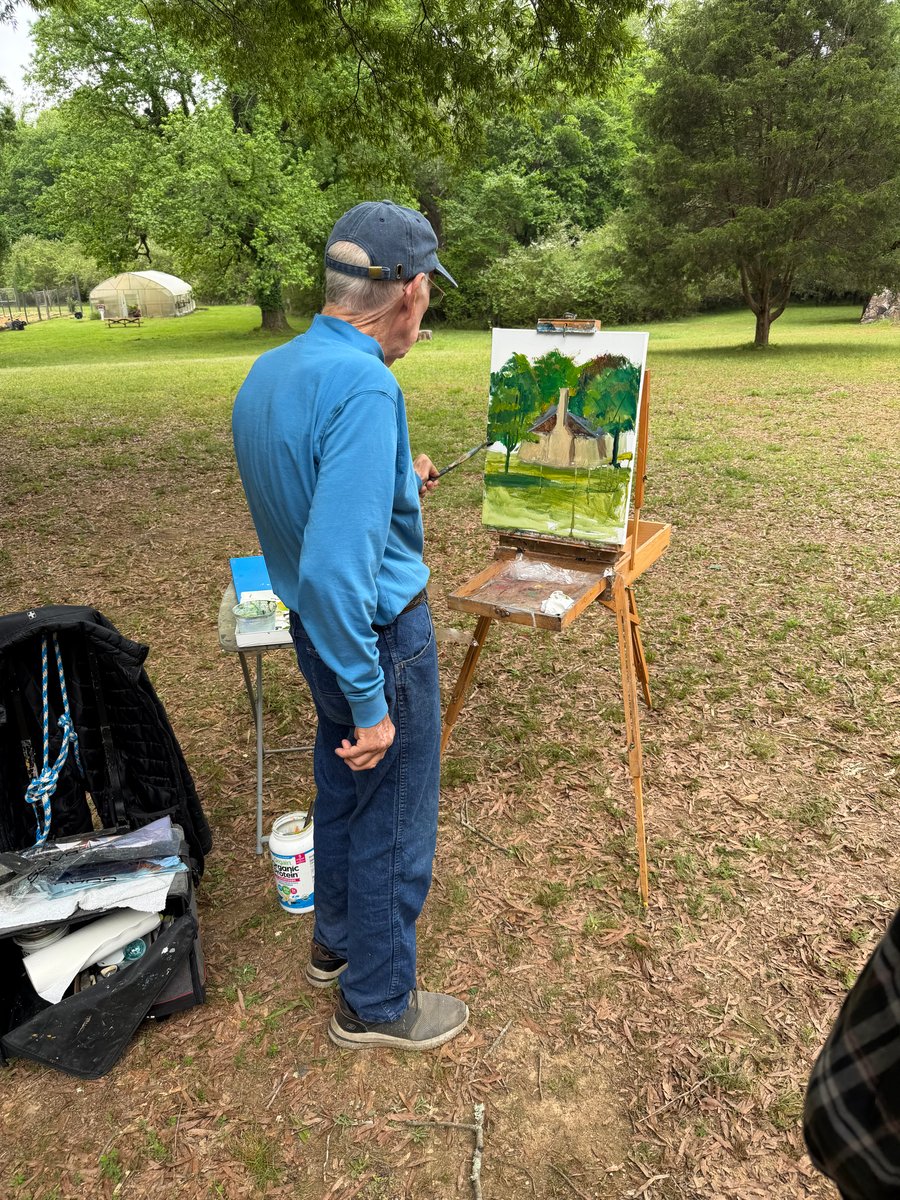
The subject matter picked itself. There's a small outbuilding on the grounds, partly hidden behind a screen of trees, that more or less begged to be painted — one of those weathered, quiet structures I seem to keep ending up in front of. I blocked in the mass of the trees first, dark greens with a few warm notes where the light was catching, then worked the building in against them. The trick with a scene like that is resisting the urge to render every leaf. You're after the feeling of the place, not the inventory.
The Light, The Bugs, The Rest of It
Plein air always comes with its own set of challenges. The light moves on you. A breeze picks up and suddenly you're chasing a paper towel across the grass. Mosquitoes find you eventually. The ground is never quite level. But there's nothing else like mixing a color against the thing you're painting ten feet in front of you — no photograph ever quite captures what your eye picks up in person, and the paintings that come out of a day like this tend to carry some of that with them. There's a looseness and an honesty to the marks that studio work has to work harder to earn.
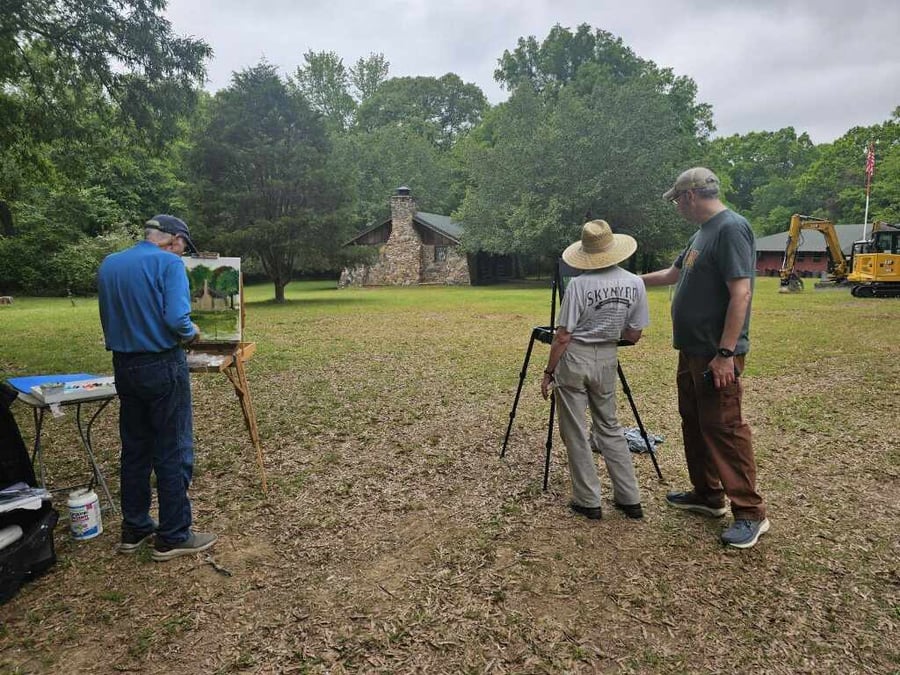
By mid-afternoon we were all at various stages of done and not-done. Some of these pieces will get finished back in the studio, some will stay as they are — studies, notes to self, reminders of a particular quality of Arkansas spring light.
Why Pfeifer
It'd be easy to just call this a pretty spot and leave it at that. But Pfeifer Camp is genuinely a piece of Little Rock's history — nearly a century of kids coming through, finding out what it's like to sleep in a cabin, fish a creek, sit around a fire. Painting there for a day felt less like using the location and more like adding a small, respectful note to a long conversation the place has been having with people for a very long time.
We'll be back. Same easels, different light.